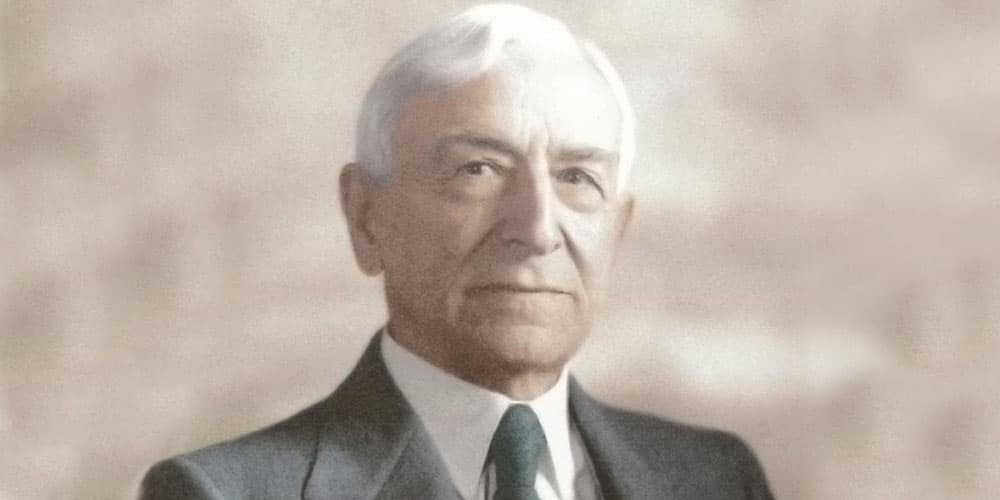
FOLIO I · DENKER

Began his studies at Indiana University in 1879 at the age of sixteen; B.A. in 1891 after an interruption for work as a bookseller.[4]
Frank A. Fetter studied at Indiana University and Cornell University.
Studied at the Sorbonne (University of Paris) before his doctorate.[4]
Obtained his doctorate at the University of Halle in 1894.[2]
Taught from 1898 to 1901 as a professor at Stanford University; he resigned over a dispute concerning academic freedom.[4]
Taught at Cornell University from 1901 to 1911.
Publication of his first treatise on economic principles (Fetter, 1904).[2]
Received an honorary doctorate (LL.D.) from Colgate University in 1909.[4]
Elected President of the American Economic Association in 1913.[5]
Publication of his second treatise on economic principles (Fetter, 1915).
Died on 21 March 1949 in Princeton, New Jersey.
Earned a doctorate in 1894 at the University of Halle under Johannes Conrad with a dissertation on population theory after Malthus.[2]
Jeremiah W. Jenks was Fetter's teacher at Indiana University and convinced him to continue his studies under Johannes Conrad.[6]
Fetter's reading of Henry George's “Progress and Poverty” during his time in the family bookshop shaped his economic ideas.[3]
Saw the still-dominant neo-Ricardian theory of Alfred Marshall as one reason why Fetter's important contributions to economics were not incorporated to an adequate degree into the theoretical framework of modern economics.
Purged economics of all traces of Ricardian or other British-objectivist theories of value and distribution, in particular any theories of differential rent as well as productivity theories of interest.
In 1928 Strigl published in an edited volume co-edited by Frank Albert Fetter; Fetter acted as editor of the volume.[1]
Frank Albert Fetter in the context of the School as a whole: five generations, their teacher-student lineages, circles and collegial ties.
Show in the family tree →