FOLIO I · THINKER · GEN. 02 · N° 060

Emil Lederer

Works
7
Articles
0
Generation
2.
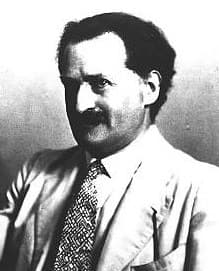
Portrait of Emil Lederer
FOL. 02 · N° 060 · Emil Lederer
BIOGRAPHY

Life and Work

Lederer grew up in Pilsen (today Plzeň) as the son of the merchant Philipp Lederer and Sophie Schwarzkopf, and went to Vienna to study in 1901. There he attended lectures in law and economics by Eugen von Philippovich, Eugen von Böhm-Bawerk, Friedrich von Wieser and Carl Menger; in the summer semester of 1903 he moved briefly to Berlin to study under Gustav Schmoller. He took his doctorate in law (Dr. iur.) in 1905 in Vienna, and a second doctorate (Dr. rer. pol.) in 1911 in Munich under Lujo Brentano, with a study of the pension insurance of salaried private-sector employees. His 1912 habilitation in Heidelberg, "Die Privatangestellten in der modernen Wirtschaftsentwicklung" (Salaried Employees in Modern Economic Development), established his profile as a theorist of the "new middle class": the first comprehensive empirical and sociological study of the occupational and political consciousness of the salaried class. At the same time Lederer was editorial secretary from 1910, joint managing editor from 1918, and from 1921 to 1933, together with Joseph Schumpeter and Alfred Weber, co-editor of the "Archiv für Sozialwissenschaft und Sozialpolitik" (Archive for Social Science and Social Policy), the most important German-language journal in the social sciences of those years. In 1918 he became associate professor and in 1922 full professor in Heidelberg, and from 1923 to 1925 an exchange professor at the Imperial University of Tokyo. From 1923 to 1931 he directed, together with Alfred Weber, the Heidelberg Institute for Social and Political Sciences; Karl Mannheim completed his habilitation there in 1926 under the supervision of Lederer and Weber. As Werner Sombart's successor in the Berlin chair of political science (1931), Lederer was among the most prominent academic Social Democrats of the Weimar Republic. Schumpeter called him the "leading academic socialist of Germany in the 1920's". Suspended by the National Socialist regime in April 1933, he emigrated by way of Paris and London to New York, where, together with Alvin Johnson, he founded the "University in Exile" at the New School for Social Research, of which he remained the first dean until his sudden death after an operation in 1939. His principal work on business cycle theory, "Konjunktur und Krisen" (Business Cycles and Crises; 1925), developed a disproportionality theory following Tugan-Baranowsky; his posthumously published "State of the Masses" (1940) is regarded as an early analysis of totalitarian mass politics.
Metadata
22. Juli 1882
29. Mai 1939
Generation 2
Life stations

Stations

  1. ⁦1901–1905⁩
    ⁦1901–1905⁩
    Jus und Nationalökonomie, Universität Wien

    Studium bei Philippovich, Böhm-Bawerk, Wieser und Menger; Kommilitonen u. a. Mises, Schumpeter, Hilferding und Bauer.

  2. 1903
    1903
    Sommersemester bei Gustav Schmoller

    Kurzes Auslandssemester an der Berliner Universität in der Tradition der Jüngeren Historischen Schule.

  3. 1905
    1905
    Promotion Dr. iur., Universität Wien

    Erste Promotion in Rechtswissenschaften an der Universität Wien.

  4. ⁦1910–1933⁩
    ⁦1910–1933⁩
    Archiv für Sozialwissenschaft und Sozialpolitik

    Ab 1910 Redaktionssekretär, ab 1918 Schriftleiter, 1921–1933 Mitherausgeber gemeinsam mit Joseph Schumpeter und Alfred Weber.

  5. 1911
    1911
    Promotion Dr. rer. pol. bei Lujo Brentano

    Zweite Promotion an der Universität München mit einer Arbeit zur Pensionsversicherung der Privatangestellten.

  6. 1912
    1912
    Habilitation Universität Heidelberg

    Habilitation mit „Die Privatangestellten in der modernen Wirtschaftsentwicklung“, dem ersten umfassenden Standardwerk zur Angestelltensoziologie.

  7. ⁦1918–1922⁩
    ⁦1918–1922⁩
    Ausserordentlicher Professor für Nationalökonomie

    Ruf auf eine Extraordinariatsstelle an der Ruprecht-Karls-Universität Heidelberg.

  8. ⁦1919–1921⁩
    ⁦1919–1921⁩
    Mitglied der Sozialisierungskommissionen

    1919 Leiter der volkswirtschaftlichen Abteilung in der österreichischen Staatskommission zur Sozialisierung, 1920/21 Mitglied der Sozialisierungskommission in Deutschland.

  9. ⁦1922–1931⁩
    ⁦1922–1931⁩
    Ordinarius für Sozialpolitik, Universität Heidelberg

    Lehrstuhl für Sozialpolitik; ab 1923 mit Alfred Weber Direktor des Instituts für Sozial- und Staatswissenschaften.

  10. ⁦1923–1925⁩
    ⁦1923–1925⁩
    Austauschprofessor, Kaiserliche Universität Tokio

    Zweijährige Gastprofessur an der Tokyo Imperial University mit angegliederten Reisen nach China.

  11. ⁦1931–1933⁩
    ⁦1931–1933⁩
    Ordinarius Staatswissenschaften, Friedrich-Wilhelms-Universität

    Nachfolge Werner Sombarts auf dem Berliner Lehrstuhl für Nationalökonomie und Finanzwissenschaft; im April 1933 vom NS-Regime suspendiert.

  12. 1933
    1933
    Emigration über Paris und London

    Flucht nach New York und Mitgründung der „University in Exile“ an der New School for Social Research gemeinsam mit Alvin Johnson.

  13. ⁦1933–1939⁩
    ⁦1933–1939⁩
    Erster Dekan der University in Exile, New School

    Aufbau und Leitung der Graduate Faculty of Political and Social Science an der New School for Social Research bis zum Tod.

  14. 1939
    1939
    Tod nach Operation

    Lederer starb am 29. Mai 1939 unerwartet im Nachgang einer Operation.

Relationships

Influences

Influenced by · 16
  1. ⁦1901–1905⁩
    ⁦1901–1905⁩

    Lederer hörte Böhm-Bawerks Vorlesungen und nahm an dessen Seminar in Wien teil – prägende Begegnung mit der Wiener Grenznutzenschule.

  2. ⁦1901–1903⁩
    ⁦1901–1903⁩

    Menger was among Lederer's Viennese teachers in the last years of his active teaching before becoming emeritus.

  3. ⁦1901–1905⁩
    ⁦1901–1905⁩

    Alongside Böhm-Bawerk, Wieser was one of Lederer's formative Viennese university teachers in economics.[1]

  4. ⁦1901–1905⁩
    ⁦1901–1905⁩

    Philippovich, Sozialpolitiker und Brücke zwischen Wiener Schule und Sozialreform, war einer der wichtigsten Wiener Lehrer Lederers.[1]

  5. ⁦1901–1921⁩
    ⁦1901–1921⁩
    Rudolf Hilferding⁦(1877–1941)⁩ · Austromarxismus

    Fellow student in Vienna, later a member of the German Socialization Commission of 1919 together with Schumpeter and Lederer.[1]

  6. ⁦1901–1905⁩
    ⁦1901–1905⁩
    Otto Bauer⁦(1881–1938)⁩ · Austromarxismus

    Fellow student in Vienna within the Austro-Marxist milieu; Lederer maintained close intellectual ties to the Austro-Marxists throughout his life.[3]

  7. ⁦1909–1911⁩
    ⁦1909–1911⁩
    Lujo Brentano

    Brentano supervised Lederer's second doctorate (Dr. rer. pol.) in Munich in 1911, with the work on the pension insurance of private-sector employees.

  8. ⁦1912–1933⁩
    ⁦1912–1933⁩
    Alfred Weber

    Heidelberg chair colleague and co-director of the Institute for Social and Political Sciences (1923–1931); co-editor of the “Archiv für Sozialwissenschaft und Sozialpolitik”.

  9. ⁦1912–1920⁩
    ⁦1912–1920⁩
    Max Weber⁦(1864–1920)⁩ · Heidelberger Schule

    Member of the Heidelberg Max Weber Circle; intellectual engagement with Weber alongside political opposition as a democratic socialist.

  10. ⁦1912–1933⁩
    ⁦1912–1933⁩
    Otto Neurath⁦(1882–1945)⁩ · Wiener Kreis

    Both members of the Heidelberg Max-Weber-Kreis; an intellectual link between Viennese logical empiricism and Heidelberg sociology.

  11. ⁦1921–1939⁩
    ⁦1921–1939⁩
    Albert Salomon

    Lederer's Heidelberg doctoral student; later a founding member of the University in Exile at the New School.[5]

  12. ⁦1922–1933⁩
    ⁦1922–1933⁩
    Werner Sombart⁦(1863–1941)⁩ · Jüngere Historische Schule

    In 1931 Lederer succeeded Sombart in the Berlin chair of state sciences (Staatswissenschaften).

  13. ⁦1924–1926⁩
    ⁦1924–1926⁩
    Karl Mannheim

    From 1924 Mannheim worked in Heidelberg under Alfred Weber and Emil Lederer and completed his Habilitation there in sociology in 1926.[2]

  14. ⁦1928–1939⁩
    ⁦1928–1939⁩
    Hans Speier

    Speier received his doctorate under Lederer in Heidelberg and followed him as a founding member to the University in Exile in New York.[4]

  15. ⁦1933–1939⁩
    ⁦1933–1939⁩
    Arthur Feiler

    An economist and founding member of the University in Exile in 1933 under Lederer's deanship.

  16. ⁦1933–1939⁩
    ⁦1933–1939⁩
    Alvin Johnson

    Johnson, president of the New School for Social Research, brought Lederer to New York in 1933 as the first dean of the University in Exile.

Emil Lederer in the context of the School as a whole: five generations, their teacher-student lineages, circles and collegial ties.

SOURCES ON STATIONS AND RELATIONSHIPS10 citations · 3 sources
CATALOGUE OF WORKS · CHRONOLOGICAL

The Books

1910s
1912
Die Privatangestellten in der modernen Wirtschaftsentwicklung
OriginalGerman
1915
Zur Soziologie des Weltkrieges
OriginalGerman
1920s
1922
Grundzüge der ökonomischen Theorie
OriginalGerman
1925
Konjunktur und Krisen
OriginalGerman
1930s
1931
Aufriss der ökonomischen Theorie
OriginalGerman
Technischer Fortschritt und Arbeitslosigkeit
OriginalGerman
1940s
1940
State of the Masses. The Threat of the Classless Society
OriginalEnglish
APA
Chicago
German historical style