FOLIO I · THINKER · GEN. 03 · N° 063

Karel Engliš

Works
8
Articles
0
Generation
3.
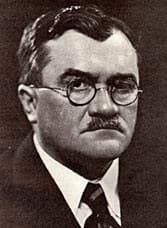
Portrait of Karel Engliš
FOL. 03 · N° 063 · Karel Engliš
BIOGRAPHY

Life and Work

Karel Engliš was born on 17 August 1880 in Hrabyně in Silesia, the ninth child of a village butcher. After the Czech secondary school in Opava (school-leaving examination 1899), he studied law at the Czech Faculty of Law of the Charles-Ferdinand University in Prague, where the economist Albín Bráf shaped his intellectual orientation. He completed his studies in 1904; a subsequent stay in Munich as private tutor to Count Czernin gave him the opportunity to attend lectures by Lujo Brentano. After posts at the Provincial Statistical Office in Prague and at the ministry in Vienna, he completed his habilitation in 1910 at the Czech Technical University in Brünn (today Brno) under Jan Koloušek, with a study of standard wage rates. In 1911 he became associate professor and in 1917 full professor in Brünn. With the founding of Masaryk University in 1919 he moved to its Faculty of Law and, as its first rector (1919/20), oversaw its constitution. In Brünn the so-called Brünn School of economics arose; here he also received Ludwig von Mises, Joseph Schumpeter and Eugen von Böhm-Bawerk, whose visits are recorded in the family guest book. At the same time he was a politician of the Czechoslovak National Democracy and, between 1920 and 1931, six times finance minister; he is credited with the stabilization of the crown, the tax reform of 1927 and the management of the consequences of the Great Depression. From 1934 to 1939 he served as governor of the Czechoslovak National Bank, pushed through the first devaluation of the crown in 1934, and resigned after the German occupation in February 1939. In the same year he went to Charles University in Prague as a full professor. In December 1947 he became its rector, but already on 27 February 1948, two days after the Communist coup, he had to step down. Engliš's main theoretical contribution is the teleological method: against the causal-subjectivist theory of value of the Austrian School, and starting from Kant's critique of knowledge, he developed an economic doctrine that understands economic relationships as a purpose-directed order. In the methodological dispute of the 1920s and 1930s he wrote polemical essays against Böhm-Bawerk's theory of value and against the Engländer and Bilimovič schools; at the same time he shared the Austrian School's core conviction that economic individualism remains indispensable for a modern market order. His two-volume main work, *Soustava národního hospodářství* (A System of National Economy; 1938), summarizes this system. In 1952 he was compulsorily transferred by administrative order from Prague to his birthplace Hrabyně, his pension was drastically cut, and his works were removed from the public libraries. There he died, impoverished, on 13 June 1961. His rehabilitation came only after 1989: in 1991 President Václav Havel posthumously awarded him the Order of Tomáš Garrigue Masaryk; in 2022 the Czech National Bank dedicated a commemorative banknote to him.
Metadata
17. August 1880
13. Juni 1961
Generation 3
Life stations

Stations

  1. ⁦1899–1904⁩
    ⁦1899–1904⁩
    Jus-Studium

    Rechtswissenschaft an der tschechischen Juristischen Fakultät der Karlo-Ferdinandeischen Universität, prägender Lehrer: Albín Bráf.

  2. 1904
    1904
    Studienaufenthalt München

    Hauslehrer des Grafen Rudolf Czernin, hört Vorlesungen bei Lujo Brentano (jüngere Deutsche Historische Schule).

  3. 1910
    1910
    Habilitation in Economics

    An der tschechischen Technischen Hochschule Brünn unter Jan Koloušek, Habilitationsschrift über Tariflöhne aus nationalökonomischer Sicht.

  4. ⁦1911–1918⁩
    ⁦1911–1918⁩
    Professor an der Technischen Hochschule

    Ab 1911 ausserordentlicher, ab 1917 ordentlicher Professor für Nationalökonomie an der tschechischen Technischen Hochschule Brünn.

  5. ⁦1919–1939⁩
    ⁦1919–1939⁩
    Ordinarius an der Masaryk-Universität

    Mitgründer und Ordinarius für Nationalökonomie an der Juridischen Fakultät der neu errichteten Masaryk-Universität; Dekan 1921/22 und 1925/26.

  6. ⁦1919–1920⁩
    ⁦1919–1920⁩
    Erster Rektor der Masaryk-Universität

    Konstituierender Rektor der Masaryk-Universität Brünn im Gründungsjahr.

  7. ⁦1920–1931⁩
    ⁦1920–1931⁩
    Finanzminister der Tschechoslowakei

    Sechsmal Finanzminister zwischen 1920 und 1931 (u. a. Regierung Tusar I, Černý I, Švehla II/III, Udržal); Steuerreform 1927, Krisenbewältigung 1929–1931.

  8. ⁦1934–1939⁩
    ⁦1934–1939⁩
    Gouverneur der tschechoslowakischen Nationalbank

    23. Februar 1934 bis 20. Februar 1939; setzt 1934 die erste Abwertung der Krone durch; Rücktritt nach der deutschen Besetzung.

  9. ⁦1939–1948⁩
    ⁦1939–1948⁩
    Ordinarius an der Karls-Universität

    Professor für Nationalökonomie an der Juridischen Fakultät der Karls-Universität Prag.

  10. ⁦1947–1948⁩
    ⁦1947–1948⁩
    Rektor der Karls-Universität

    Rektor von Dezember 1947 bis 27. Februar 1948, zwei Tage nach dem kommunistischen Februar-Umsturz erzwungener Rücktritt.

  11. ⁦1952–1961⁩
    ⁦1952–1961⁩
    Zwangsverbannung in den Geburtsort

    1952 administrativ aus Prag nach Hrabyně zwangsverlegt; Werke aus öffentlichen Bibliotheken entfernt, Pension drastisch gekürzt; stirbt dort 1961 verarmt.

  12. 1961
    1961
    Tod in Hrabyně

    Stirbt am 13. Juni 1961 in seinem Geburtsort.

Relationships

Influences

Influenced by · 3
  1. ⁦1899–1904⁩
    ⁦1899–1904⁩
    Albín Bráf

    At the Czech Faculty of Law of the Karl-Ferdinand University, Bráf was Engliš's formative teacher and in 1904 secured him a post at the Provincial Statistical Office.

  2. ⁦1904–1904⁩
    ⁦1904–1904⁩
    Lujo Brentano

    During a stay in Munich as private tutor to Count Czernin, Engliš attended Brentano's lectures (younger German Historical School).

  3. ⁦1910–1910⁩
    ⁦1910–1910⁩
    Jan Koloušek

    Koloušek was the Habilitation supervisor for Engliš' treatise on tariff wages at the Czech Technical University in Brünn (today Brno); after Koloušek's departure in 1911, Engliš took over the chair.

Karel Engliš in the context of the School as a whole: five generations, their teacher-student lineages, circles and collegial ties.

CATALOGUE OF WORKS · CHRONOLOGICAL

The Books

1910s
1916
Sociální politika
OriginalCzech
1920s
1925
Grundlagen des wirtschaftlichen Denkens
OriginalGerman
1929
Finanční věda
OriginalCzech
1930s
1930
Teleologie jako forma vědeckého poznání
OriginalCzech
1932
Theorie státního hospodářství
OriginalCzech
1938
Soustava národního hospodářství
OriginalCzech
1940s
1947
Malá logika
OriginalCzech
1990s
1992
Economics: A Purpose Oriented Approach
OriginalEnglish
APA
Chicago
German historical style