FOLIO I · THINKER · GEN. 04 · N° 072

Ilse Mintz

Works
6
Articles
0
Generation
4.
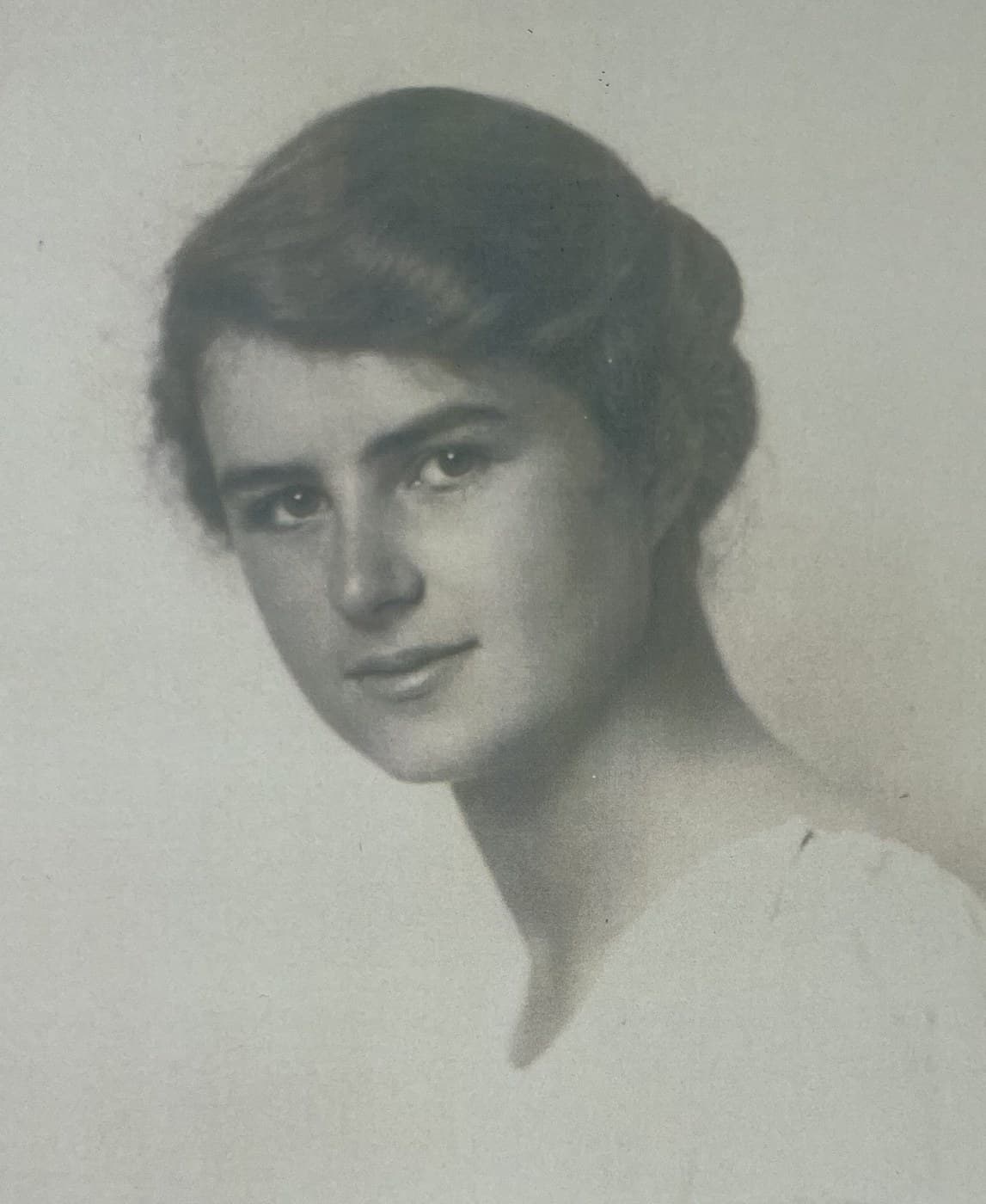
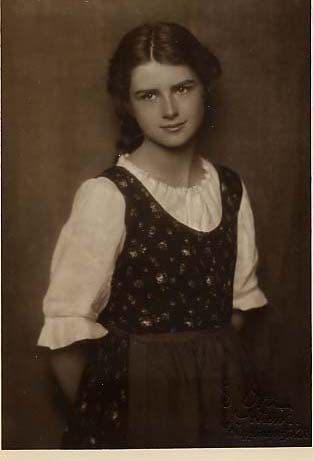
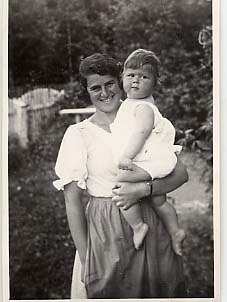
Portrait of Ilse MintzPortrait of Ilse Mintz: Portrait 1916, Ilse Schüller als Mädchen (12 Jahre). Zweite  (1916)Portrait of Ilse Mintz: Ilse Schüller-Mintz mit Tochter Gabriele, 1932 (1932)
FOL. 04 · N° 072 · Ilse Mintz
BIOGRAPHY

Life and Work

Ilse Schüller was born on 19 June 1904 in Vienna, the eldest daughter of the trade-ministry official and economist Richard Schüller and Ernestine Rosenthal. She grew up in an upper-middle-class, assimilated Jewish household closely interwoven with the economic and diplomatic elites of the late Habsburg monarchy and the First Republic. Her sisters Susanne Schüller-Piroli (a historian) and Hilde Kurz (an art historian) reflect the family's pattern of scholarly, middle-class socialization. At the University of Vienna she studied economics and received her doctorate under Ludwig von Mises in 1927. Mises admitted her to his private seminar, where she concentrated on questions of foreign trade. In December 1926 she married the business lawyer Maximilian Mintz, with whom she had two children: Walter Mintz (1929–2004, later a hedge-fund manager) and Marjorie Perloff (1931–2024, a literary scholar). In the 1930s she worked at the Vienna Institute for Business Cycle Research, then directed by Hayek and later by Morgenstern. After the Anschluss the family fled on 12 March 1938 via Switzerland and the Netherlands to New York. In the United States Mintz continued her academic career: from 1943 she studied again at Columbia University and earned a second doctorate in 1951, supervised by Arthur F. Burns, the later chairman of the Federal Reserve. Her dissertation on the deterioration in quality of foreign bonds in the 1920s appeared in 1951 as an NBER monograph and is still regarded as a standard reference on the preconditions of the bond crisis. As a senior research associate at the National Bureau of Economic Research she worked closely with Burns and Wesley C. Mitchell and published a series of influential studies on international trade and business cycles: on the American-British trade balance (1959), on fluctuations in US exports (1961, 1967), and on the methodology of business-cycle dating, using West Germany as an example (1969). In parallel she taught as an associate professor and, from the 1960s, as professor of economics at Columbia. After retiring as emerita in 1969 she moved to Washington, taught at the Catholic University of America, and in 1973 published for the American Enterprise Institute the much-cited study "U.S. Import Quotas: Costs and Consequences". She died on 19 June 1978 in Washington, D.C., on her 74th birthday.
Metadata
19. Juni 1904
in Wien, Österreich-Ungarn
19. Juni 1978
Generation 4
Life stations

Stations

  1. ⁦1922–1927⁩
    ⁦1922–1927⁩
    Studium der Nationalökonomie, Universität Wien

    Studierte Volkswirtschaftslehre an der Universität Wien, hauptsächlich bei Ludwig von Mises.

  2. 1927
    1927
    Promotion bei Ludwig von Mises

    Erstes Doktorat in Nationalökonomie an der Universität Wien.

  3. ⁦1927–1934⁩
    ⁦1927–1934⁩
    Teilnehmerin des Mises-Privatseminars

    Mises nahm sie in sein Privatseminar auf, wo sie sich auf Aussenhandel spezialisierte.

  4. ⁦1929–1938⁩
    ⁦1929–1938⁩
    Institute for Business Cycle Research

    Tätigkeit am Wiener Institut für Konjunkturforschung mit Schwerpunkt Aussenhandel.

  5. 1938
    1938
    Flucht über Schweiz und Niederlande nach New York

    Nach dem „Anschluss“ am 12. März 1938 floh die Familie Mintz binnen Tagen über die Schweiz und Holland nach New York.

  6. ⁦1943–1951⁩
    ⁦1943–1951⁩
    Zweitstudium an Columbia University

    Wiederaufnahme des ökonomischen Studiums an der Columbia University in New York.

  7. 1951
    1951
    Zweite Promotion bei Arthur F. Burns, Columbia

    Dissertation über die Qualitätsverschlechterung ausländischer Anleihen der 1920er Jahre, erschienen als NBER-Monografie.

  8. ⁦1951–1969⁩
    ⁦1951–1969⁩
    Professorin an Columbia University und am NBER

    Lehrte als Associate Professor und später als Professor of Economics an Columbia; parallel Senior Research Associate am National Bureau of Economic Research mit Schwerpunkt Konjunkturzyklen und internationaler Handel.

  9. ⁦1969–1978⁩
    ⁦1969–1978⁩
    Lecturer, Catholic University of America

    Nach der Emeritierung in Columbia Lehrtätigkeit an der Catholic University of America und Mitarbeit am American Enterprise Institute.

  10. 1978
    1978
    Tod in Washington, D.C.

    Gestorben am 19. Juni 1978, ihrem 74. Geburtstag.

Relationships

Influences

Influenced by · 5
  1. ⁦1922–1927⁩
    ⁦1922–1927⁩

    Doctoral supervisor in Vienna in 1927; Mintz was subsequently a participant in his private seminar.

  2. ⁦1927–1934⁩
    ⁦1927–1934⁩

    Mises admitted her into his private seminar, where she specialised in foreign trade.

  3. ⁦1943–1951⁩
    ⁦1943–1951⁩
    Arthur Burns⁦(1904–1987)⁩ · NBER / US-Notenbank

    Supervisor of her second doctorate at Columbia University in 1951, on the deterioration in quality of American foreign bonds.

  4. ⁦1951–1969⁩
    ⁦1951–1969⁩
    Arthur Burns⁦(1904–1987)⁩ · NBER / US-Notenbank

    Long-standing research collaboration at the NBER; Mintz was a Senior Research Associate under Burns' academic direction.

  5. ⁦1951–1969⁩
    ⁦1951–1969⁩
    Milton Friedman⁦(1912–2006)⁩ · Chicago School

    NBER colleagues; a shared institutional affiliation over decades, explicitly mentioned by the daughter Marjorie Perloff.

Ilse Mintz in the context of the School as a whole: five generations, their teacher-student lineages, circles and collegial ties.

CATALOGUE OF WORKS · CHRONOLOGICAL

The Books

1950s
1951
Deterioration in the Quality of Foreign Bonds Issued in the United States, 1920-1930
OriginalEnglish
1959
Trade Balances during Business Cycles: U.S. and Britain since 1880
OriginalEnglish
1960s
1961
American Exports During Business Cycles, 1879-1958
OriginalEnglish
1967
Cyclical Fluctuations in the Exports of the United States since 1879
OriginalEnglish
1969
Dating Postwar Business Cycles: Methods and Their Application to Western Germany, 1950-67
OriginalEnglish
1970s
1973
U.S. Import Quotas: Costs and Consequences
OriginalEnglish
APA
Chicago
German historical style