FOLIO I · DENKER

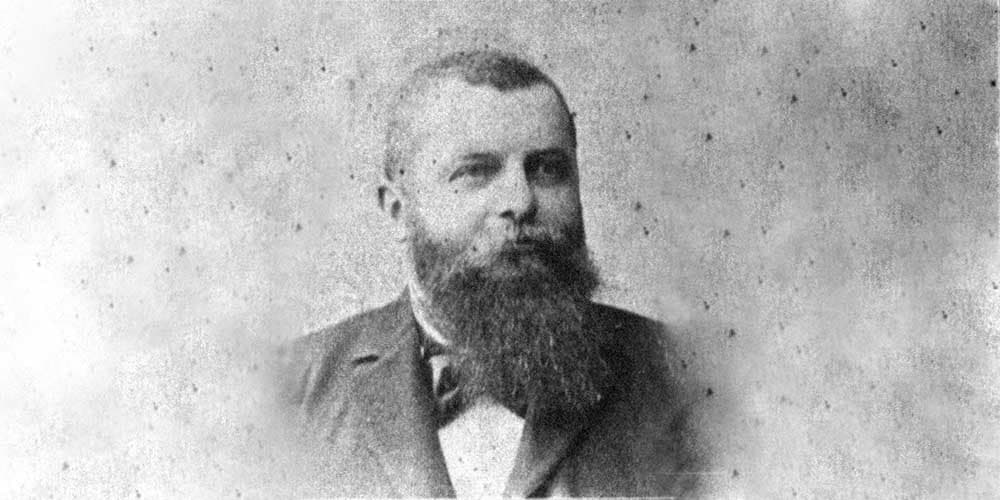
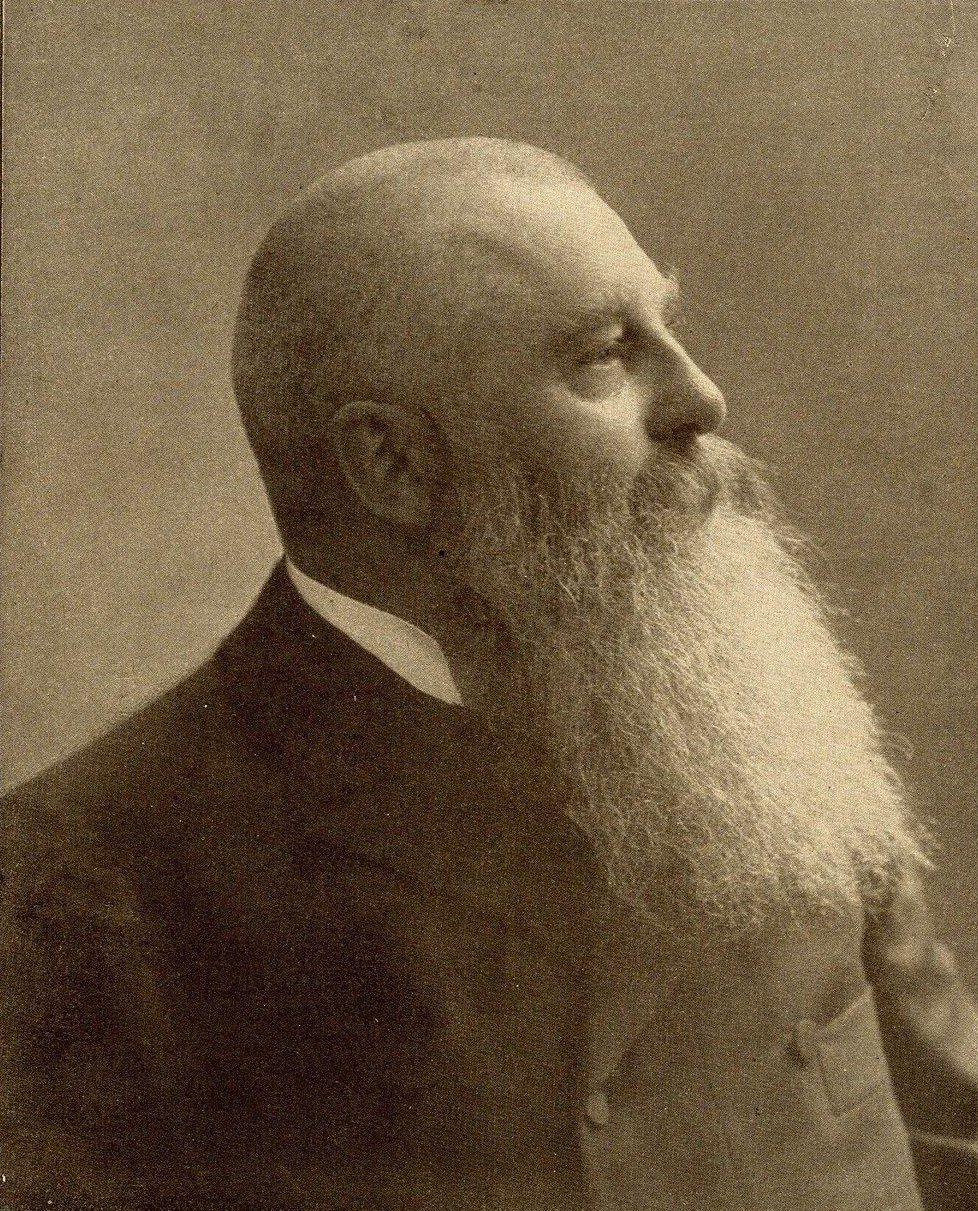
Born on 12 June 1856 in Reichenberg (today Liberec), Bohemia, the son of a railway director.[1]
Worked as a political official in the Lower Austrian Statthalterei (governor's office), followed by supplementary studies in economics in Berlin.[1]
Doctorate of law (Dr. jur.) at the University of Vienna in 1878.[1]
After working at the Lower Austrian Statthalterei (governor's office), he completed his Habilitation with a study on the economist Johann Heinrich von Thünen (1783–1850).[1]
Publication of the treatise on entrepreneurial profit (1884).[1]
Publication of the first scholarly biographies of Karl Marx (1884 and 1885).
From 1885 a member of the board of the German School Association; from 1905 its First Chairman.[1]
As a Privatdozent, Gross taught at the University of Vienna until 1897, latterly as an associate professor.[1]
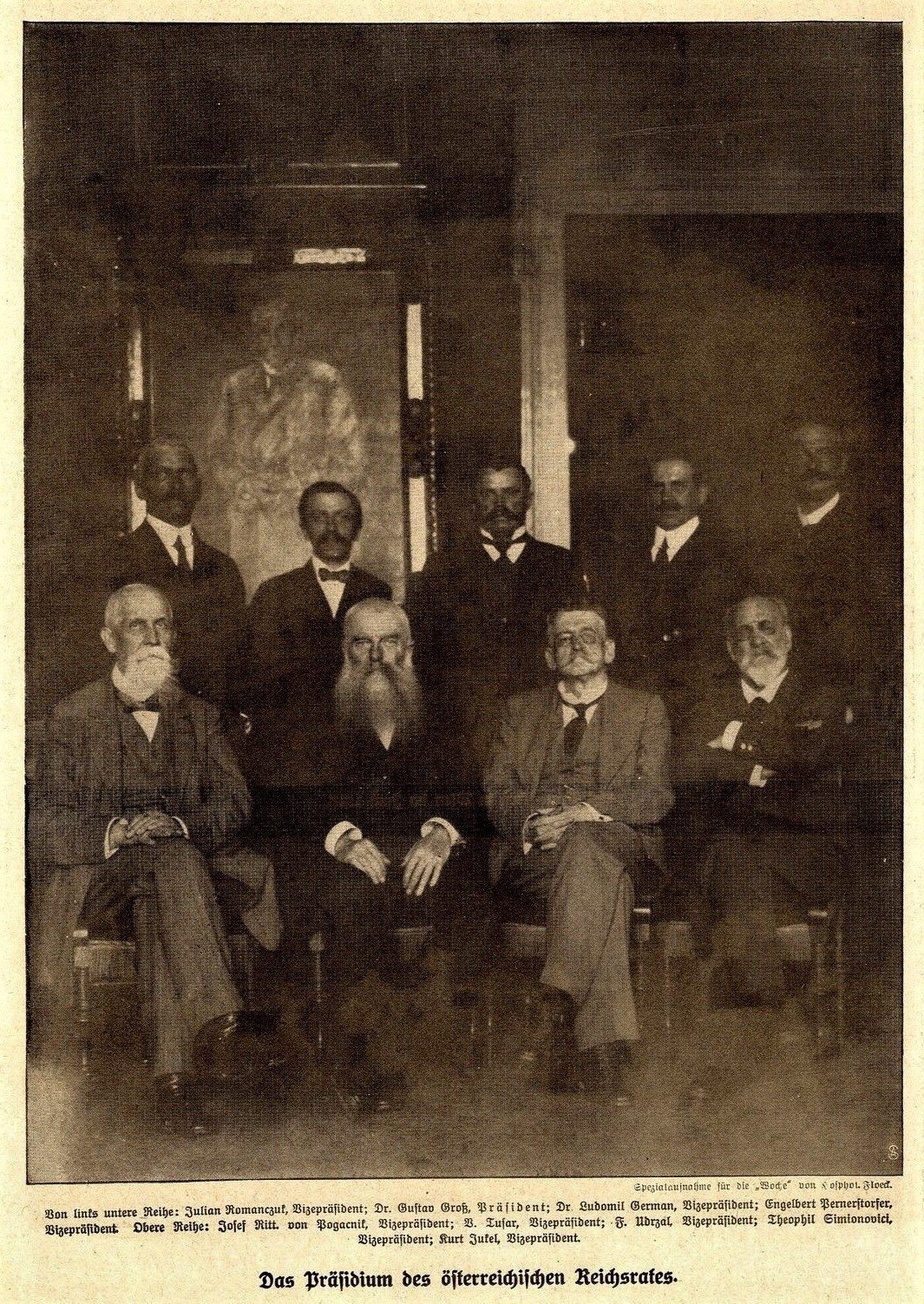
Towards the end of the First World War, when the war economy had reached its full central-bureaucratic and planned-economy development, Gross was elected the last President of the House of Deputies of the Monarchy.[1]
Member of the Provisional National Assembly for German-Austria.[2]
Groß counted himself part of the tradition of Adolph Wagner and espoused his thesis of the steady expansion of the tasks of the state, to which in the long run only the family would set limits.[1]
Groß counted himself part of the tradition of Albert Friedrich Eberhard Schäffle.
Groß wurde von Menger bei der Aufzählung seiner Habilitanten anlässlich seiner Emeritierung nicht erwähnt — ein zwiespältiges Verhältnis trotz formaler Verbindung über die Wiener Habilitation.[1]
Gustav Gross in the context of the School as a whole: five generations, their teacher-student lineages, circles and collegial ties.
Show in the family tree →