FOLIO I · PENSEURS · GÉN. 04 · N° 044

G.L.S. Shackle

Œuvres
15
Articles
69
Génération
4.
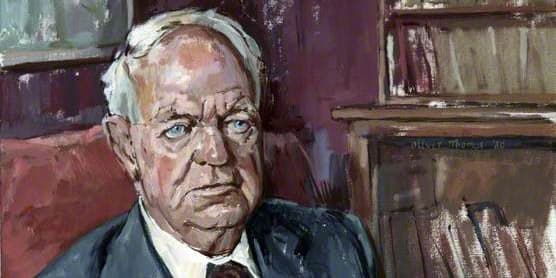
Portrait de G.L.S. Shackle
FOL. 04 · N° 044 · G.L.S. Shackle
BIOGRAPHIE

Vie et œuvre

Le père de Shackle était professeur de mathématiques et prépara John Maynard Keynes à une bourse au Eton College. Comme ses parents n'avaient pas les moyens de le soutenir durant ses études, il travailla comme employé de banque. Pendant une formation d'enseignant, il étudia parallèlement pour obtenir un BA à l'University of London, qu'il décrocha en 1931. Il commença sa thèse de doctorat sous la direction de Friedrich Hayek à la LSE, mais se tourna ensuite vers une interprétation de la General Theory of Employment, Interest and Money de Keynes. Il obtint son doctorat en 1937. Après quelques postes universitaires, Shackle fut nommé, au déclenchement de la Seconde Guerre mondiale en 1939, à la S-Branch, le cercle restreint d'économistes de Winston Churchill. Après la guerre, il occupa la chaire Brunner à l'University of Liverpool jusqu'à sa retraite universitaire en 1969. Après avoir commencé sa thèse sous la direction de Hayek, Shackle se tourna par la suite vers le subjectivisme radical et le poussa jusqu'au nihilisme.
Métadonnées
14. Juni 1903
3. März 1992
4e génération
Étapes de la vie

Étapes

  1. 1903
    1903
    Naissance

    Né le 14 juillet 1903 à Cambridge. Son père était professeur de mathématiques et prépara John Maynard Keynes à l'obtention d'une bourse au Eton College.

  2. 1914
    1914
    Perse School Cambridge– inféré

    Fréquenta la Perse School à Cambridge, mais dut interrompre ses études pour des raisons financières et travailla comme employé de banque.[1]

  3. 1931
    1931
    Licence (BA) de l'University of London

    Ses parents ne pouvant le soutenir, Shackle travailla comme employé de banque et prépara en parallèle, au cours d'une formation d'enseignant, une licence (BA) de l'University of London, qu'il obtint en 1931.

  4. 1937
    1937
    Doctorat à la LSE

    Il commença sa thèse sous la direction de Friedrich Hayek à la LSE, puis se tourna vers une interprétation de la General Theory of Employment, Interest and Money de Keynes. Doctorat en 1937.

  5. ⁦1939–1945⁩
    ⁦1939–1945⁩
    Nomination au S-Branch

    Après le déclenchement de la Seconde Guerre mondiale en 1939, il fut nommé au S-Branch, le cercle restreint d'économistes de Winston Churchill.

  6. ⁦1945–1950⁩
    ⁦1945–1950⁩
    Cabinet Office et University of Leeds– approximatif

    Après la fin de la guerre, postes au Cabinet Office et à l'University of Leeds avant sa nomination à Liverpool.[1]

  7. ⁦1951–1969⁩
    ⁦1951–1969⁩
    Chaire Brunner à l'University of Liverpool

    Titulaire de la chaire Brunner d'économie politique à l'University of Liverpool de 1951 jusqu'à son éméritat en 1969.

  8. 1992
    1992
    Décès

    Mort le 3 mars 1992 à l'âge de 88 ans à Aldeburgh, dans le Suffolk ; ses archives scientifiques sont conservées à la Cambridge University Library.

Relations

Influences

Influencé par · 3
  1. Shackle begann seine Doktorarbeit unter der Leitung Friedrich Hayeks an der LSE, wechselte dann allerdings zu einer Interpretation von Keynes' General Theory of Employment, Interest and Money und erlangte den Doktorgrad 1937.

  2. Gunnar Myrdal⁦(1898–1987)⁩ · Schwedische Schule

    Gunnar Myrdal influença la pensée de Shackle, en particulier sur le plan de l'analyse ex ante / ex post.[1]

  3. John Maynard Keynes⁦(1883–1946)⁩ · Cambridge School

    Pendant sa thèse de doctorat, Shackle s'orienta vers une interprétation de la General Theory of Employment, Interest and Money de Keynes.

G.L.S. Shackle dans le contexte de l'ensemble de l'école : cinq générations, leurs filiations maître-élève, leurs cercles et leurs collégialités.

SOURCES SUR LES ÉTAPES ET LES RELATIONS4 références · 1 source
  • [1]Earl: G. L. S. Shackle (Palgrave-Biographie) · 3×
  • [2]Shackle: A Student's Pilgrimage (Selbstbiographische Rückschau)
Topographie

Lieux d'activité

CATALOGUE DES ŒUVRES · CHRONOLOGIQUE

Les livres

années 1930
1938
Expectations, Investment and Income
OriginalAnglais
années 1940
1949
Expectations in Economics
OriginalAnglais
années 1950
1952
Mathematics at the Fireside
OriginalAnglais
1958
A New Prospect of Economics
OriginalAnglais
années 1960
1967
The Years of High Theory: Invention and Tradition in Economic Thought 1926-1939
OriginalAnglais
1968
A Scheme of Economic Theory
OriginalAnglais
Economics for Pleasure
OriginalAllemand
Expectations Investment and Income
OriginalAnglais
1969
Decision order and time in human affairs
OriginalAnglais
années 1970
1970
Ce manuel développe une théorie de l'entreprise, le centre de décision qui détermine ce qu'il faut produire, en quelles quantités et par quelle combinaison de facteurs. Shackle expose d'abord l'appareil orthodoxe de la maximisation en information parfaite : la mesure de la production, les matrices entrées-sorties de Leontief, les fonctions de production, les courbes de coût et de recette, et la condition d'égalité du coût marginal et de la recette marginale formulée pour la première fois par Cournot. Il en vient ensuite à son thème central, la décision en situation d'incertitude. Parce que l'investissement engage un équipement durable dans un avenir inconnaissable, l'entrepreneur ne peut se fier à la probabilité, qui suppose des expériences répétables. Shackle propose à la place la surprise potentielle, l'ascendance et les valeurs de focalisation, et les applique à l'actualisation, à l'échelle de l'investissement, à l'emprunt, à la décision interdépendante dans le duopole et au marchandage tel que l'a analysé Edgeworth. Un chapitre de conclusion ordonne en un seul schéma les notions de profit et d'équilibre qui en résultent.
OriginalAnglais
1972
Epistemics & Economics: A Critique of Economic Doctrines
OriginalAnglais
1979
Imagination and the Nature of Choice
OriginalAnglais
années 1980
1982
Cantillon far ahead of his time
OriginalAnglais
1988
Business, Time and Thought
OriginalAnglais
années 2000
2004
Economists in Discussion: The Correspondence Between G.L.S. Shackle and Stephen F. Frowen, 1951-1992 [S. F. Frowen, ed.]
OriginalAnglais
ARTICLES · 69 RÉPERTORIÉS

Essais, comptes rendus, conférences

années 1930
1933
Some notes on monetary theories of the trade cycle
OriginalAnglais
1936
The breakdown of the boom: a possible mechanism
OriginalAnglais
1937
Dynamics of the crisis: a suggestion
OriginalAnglais
1939
Expectations and employment
OriginalAnglais
The multiplier in closed and open systems
OriginalAnglais
années 1940
1940
A reply to Professor Hart
OriginalAnglais
The nature of the inducement to invest
OriginalAnglais
1941
A means of promoting investment
OriginalAnglais
1942
A theory of investment decisions
OriginalAnglais
1943
The expectational dynamics of the individual
OriginalAnglais
1945
An analysis of speculative choice
OriginalAnglais
Myrdals’s analysis of monetary equilibrium
OriginalAnglais
1946
Interest-rates and the pace of investment
OriginalAnglais
1947
The deflative or inflative tendency of Government receipts and disbursements
OriginalAnglais
1949
Probability and uncertainty
OriginalAnglais
Some theoretical aspects of payment by results
OriginalAnglais
The nature of interest rates
OriginalAnglais
années 1950
1950
Three versions of the 0-surface: some notes for a comparison
OriginalAnglais
1951
Interest-rates as an instrument of economic policy
OriginalAnglais
The nature and role of profit
OriginalAnglais
1952
On the meaning and measure of uncertainty, Part I
OriginalAnglais
1953
A chart of economic theory
OriginalAnglais
Economics and sincerity
OriginalAnglais
The economist’s view of profit
OriginalAnglais
The logic of surprise
OriginalAnglais
What makes an economist?
OriginalAnglais
1954
Bank rate and the modernisation of industry
OriginalAnglais
Professor Keirstead’s theory of profit
OriginalAnglais
The complex nature of time as a concept in economics
OriginalAnglais
1955
Business men on business decisions
OriginalAnglais
Expectation, income and profit
OriginalAnglais
The Nature of Inftation
OriginalAnglais
1956
Expectation and cardinality
OriginalAnglais
Marshallian and Paretian stems
OriginalAnglais
1957
Odds, possibility and plausibility in Shackle’s theory of decision
OriginalAnglais
1958
Decisions in face of uncertainty: some criticisms and extensions of a theory
OriginalAnglais
The economist’s model of man
OriginalAnglais
1959
Time and thought
OriginalAnglais
années 1960
1960
Business and uncertainty
OriginalAnglais
1961
Incertezza e profitti
OriginalItalien
Keynes and the nature of human affairs
OriginalAnglais
Recent theories concerning the nature and role of interest
OriginalAnglais
The ruin of economy
OriginalAnglais
1962
Decision et incertitude
OriginalFrançais
Descrizione dello stato di incertezza
OriginalItalien
L’eclissi della ‚Grande Teoria‘
OriginalItalien
1963
General thought-schemes and the economist
OriginalAnglais
I tre signifi.canti del tempo nella trattazione economica marshalliana
OriginalItalien
L’equilibre: etude de sa signification et de ses limites
OriginalFrançais
The hedgehog and the fox
OriginalAnglais
Theory and the business man
OriginalAnglais
1966
Policy, poetry and success
OriginalAnglais
1967
On the nature of profit
OriginalAnglais
années 1970
1972
Marginalism: the harvest
OriginalAnglais
1973
Keynes and today’s establishment in economic theory: a view
OriginalAnglais
1978
Imagination, Formalism and Choice
OriginalAnglais
1979
On Hicks’s Causality in Economics
OriginalAnglais
années 1980
1980
Imagination, unknowledge and choice
OriginalAnglais
1982
Comment
OriginalAnglais
Means and meaning in economic theory
OriginalAnglais
Nature, Notion et Notation de I’Incertitude
OriginalAnglais
Sir John Hicks’s ‚IS-LM: an explanation‘: a comment
OriginalAnglais
1983
A student’s pilgrimag
OriginalAnglais
Decisions, process and the market
OriginalAnglais
Levels of simplicity in Keynes’s theory of money and employment
OriginalAnglais
The romantic mountain and the classic lake: Alan Coddington’s Keynesian Economi
OriginalAnglais
1984
Comment on: Randall Bausor’s ‚Toward a historically dynamic eco- nomics‘, and Malcolm Rutherford’s ‚Rational expectations and Keyne- sian uncertainty‘
OriginalAnglais
Economics and the Educator’s Art
OriginalAnglais
1986
Decision
OriginalAnglais
APA
Chicago
Style historique allemand