FOLIO I · DENKER
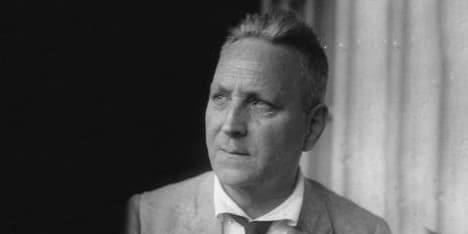
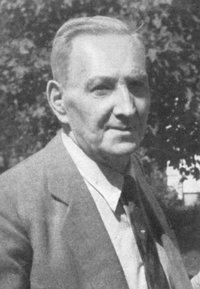
Born on 18 September 1869 in Vienna.
Before his studies, Thurnwald performed military service.
After his military service he studied law, economics and Oriental languages, among others as a student of Carl Menger.
Doctorate in law (Dr. jur.) at the University of Vienna.
After his doctorate he initially took up various civil-service posts.
Entered the civil service in 1896, first in Bosnia, later at the Chamber of Commerce in Graz.[1]
Moved to Berlin in 1901 and took up a post at the Ethnological Museum (then the Museum für Völkerkunde); pursued ethnological studies and undertook research expeditions.
First major field-research expedition to the Solomon Islands and Micronesia.[5]
Second major field-research expedition to the central New Guinea highlands; Thurnwald was the first European in this region.[6]
Habilitated at the University of Halle in 1917.
Began teaching in Berlin in 1924.
Founded the <em>Zeitschrift für Völkerpsychologie und Soziologie</em> (Journal for Ethnopsychology and Sociology) in 1925, later renamed <em>Sociologus</em>.[5]
Guest lectures at US universities from 1931 to 1936 — Harvard, Yale and the University of California, Berkeley.
Received a professorship at the University of Berlin (Friedrich Wilhelm University) in 1937.[1]
After the Second World War, professor at Humboldt University, later at the Free University of Berlin.
Founded the Institute for Sociology and Ethnology in Berlin.
Died on 19 January 1954 in Berlin.
From 1890 studied history, law and economics at the University of Vienna and attended Carl Menger's lectures on economics; adopted his insistence on the exact definition of concepts and causal investigation.[7]
Co-author of “The Missionary and Anthropological Research” (1932) and of an ethnological work on Africa (1940) with the Berlin Africanist Diedrich Westermann.[3]
His wife Hilde Thurnwald participated as an anthropologist in field research in Africa; shared research and publication practice.[4]
Richard Thurnwald in the context of the School as a whole: five generations, their teacher-student lineages, circles and collegial ties.
Show in the family tree →