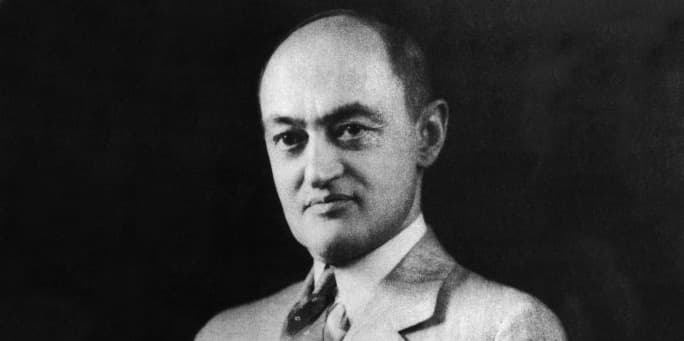
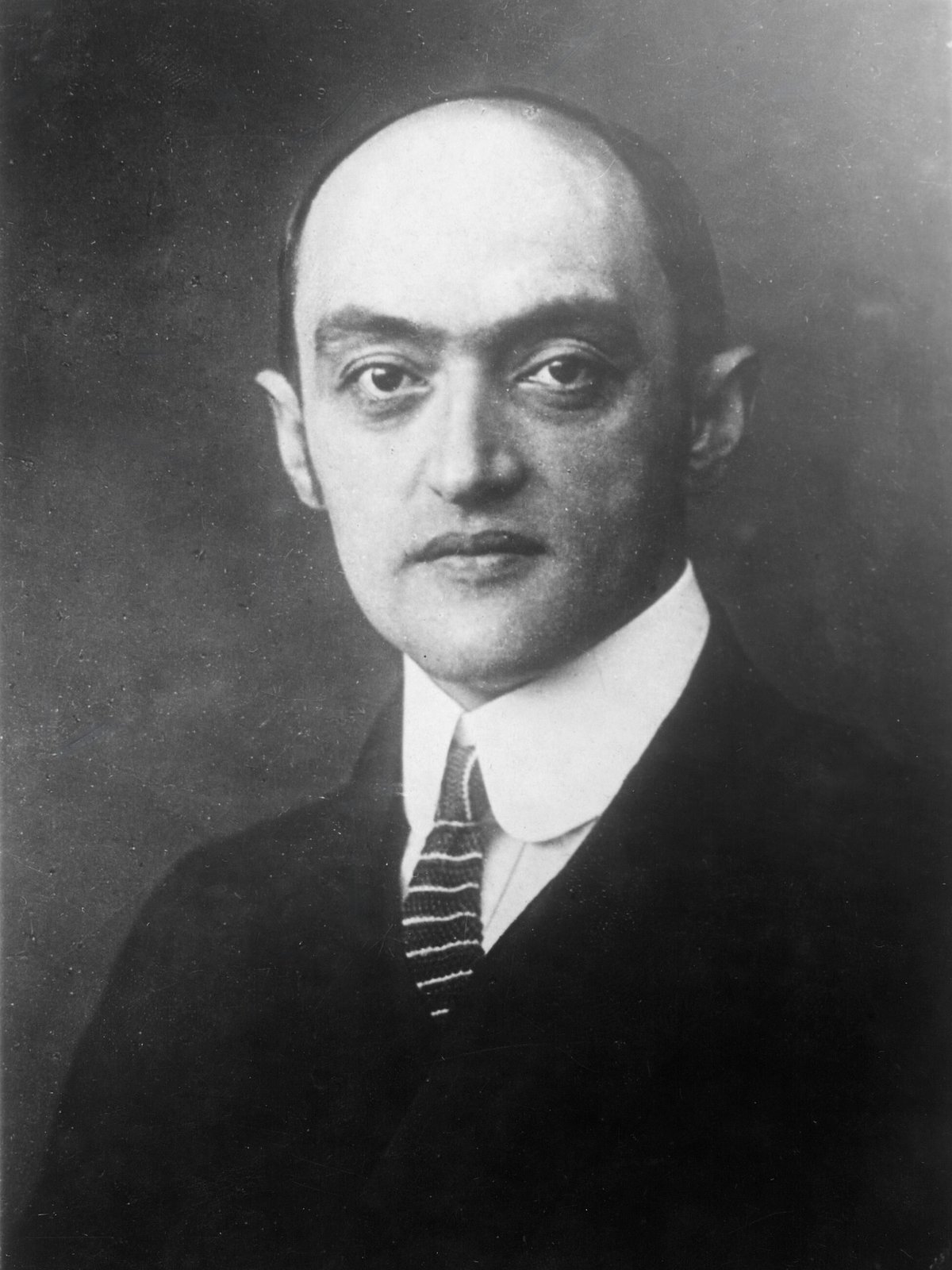
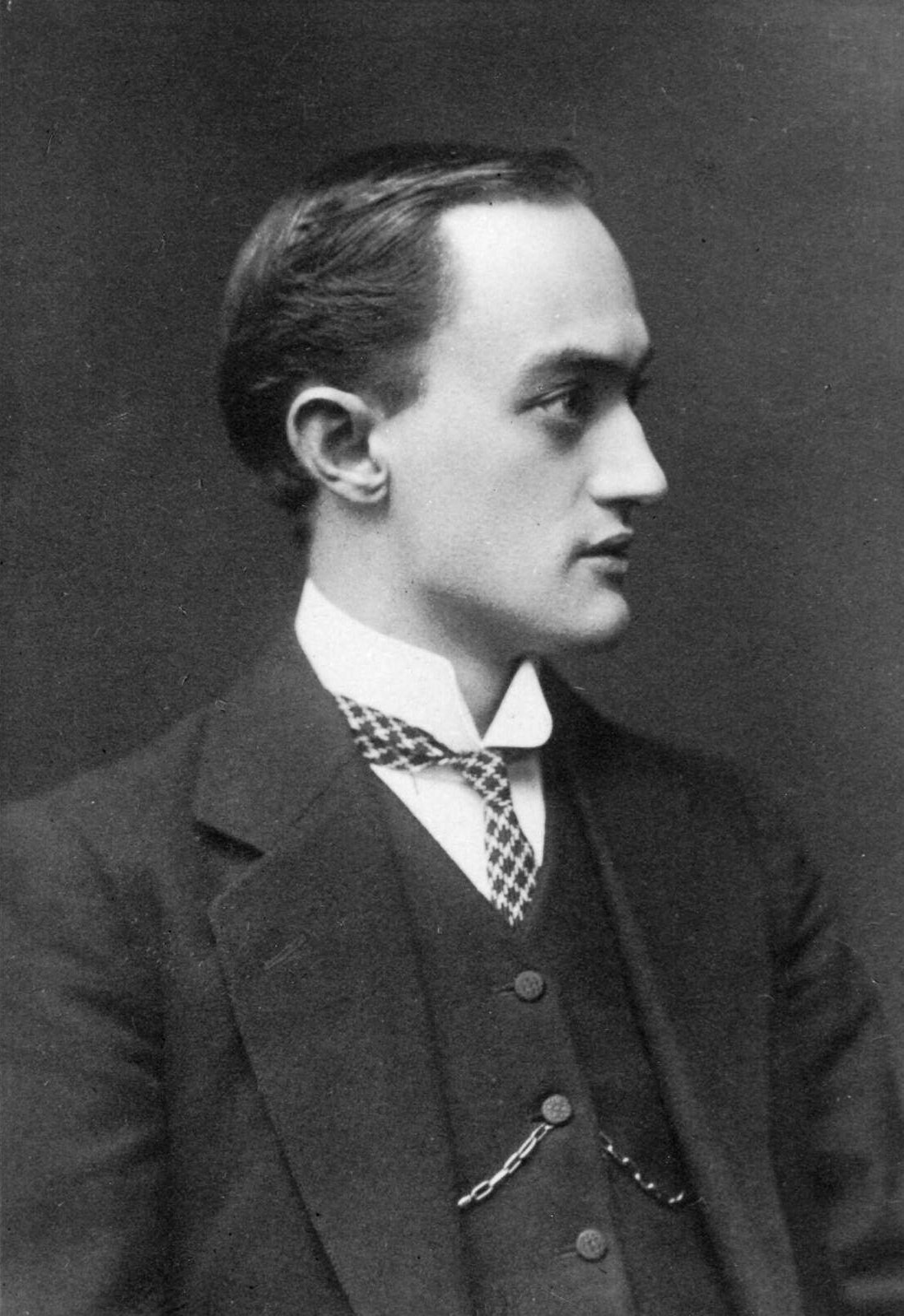
FOLIO I · DENKER

His father, a cloth manufacturer, died in 1887, when Joseph was four years old.[1]
After the early death of his father, Schumpeter's mother Johanna moved to Graz, where in 1893 she married Field Marshal Lieutenant Sigismund von Kéler, thirty-two years her senior, and relocated with him to Vienna.[1]
Moved to Vienna with his mother and stepfather following their marriage in Graz.
Attended the Theresianum in Vienna from 1893 to 1901; passed the Matura with distinction.[1]
Studied law in Vienna; under the influence of Menger's pupils Friedrich von Wieser, Eugen von Böhm-Bawerk and Eugen Philippovich von Philippsberg, he turned above all to economics.[1]
Doctorate in law (Dr. iuris) at the University of Vienna in February 1906.[1]
A period of study and research in Berlin (1906) and London (1906–1907), following his doctorate.[1]
After completing his degree in Vienna, Schumpeter added to his 'Austrian' training a then still rare English education at the London School of Economics and at Oxford and Cambridge.
In 1907 he married Gladys Ricarde Seaver, an Englishwoman twelve years his senior and the daughter of a senior Anglican dignitary. They separated in 1913 and divorced in 1925.[4]
Position at the International Mixed Court in Cairo, 1907–1908; he handled commercial cases and used the time to work on his Habilitation manuscript.[1]
Publication of <em>Das Wesen und der Hauptinhalt der theoretischen Nationalökonomie</em> (1908), with a balanced account of the Methodenstreit and a plea for methodological individualism.
Habilitation at the University of Vienna in 1909, shortly after the publication of "The Nature and Essence of Economic Theory" (1908).[1]
Took up an associate professorship in Czernowitz, in present-day Ukraine, in 1909.[1]
At the age of twenty-eight, appointed to the Chair of "Political Economy" at the University of Graz.[1]
Publication of "The Theory of Economic Development" (1912), which quickly attracted international attention.
Took up a visiting professorship at Columbia University in New York in 1914.[1]
Having returned from America, Schumpeter was immediately elected Dean of the Graz Faculty of Law.
Member of the German Socialisation Commission under Karl Kautsky in 1918; to everyone's surprise, he advocated the complete and immediate nationalisation of coal mining.
Appointed Minister of Finance in the socialist government in 1919; seven months later he was forced to resign.[1]
From 1921, president of the M. L. Biedermann & Co. Bank in Vienna; after financial losses in 1924, he resigned in 1925.[1]
In 1925 he married, as his second wife, Anna Josefina Reisinger (the daughter of the caretaker in his mother's house, twenty years his junior); she died on 3 August 1926 giving birth to their first child — the child did not survive either.[5]
From 1925, he held the chair of economic and political sciences in Bonn; he made Bonn a meeting place for economists from around the world.[1]
Visiting professorship at Harvard University in 1927/28 (and again in 1930) — preparing the later appointment to Harvard.[6]
In 1932 Schumpeter ended his teaching in Germany and moved to Harvard University in Cambridge (USA); he gathered around him a distinguished circle of postgraduate students and young researchers and contributed to the 'golden age of economics' at Harvard.[1]
In 1937 he married, as his third wife, the American economic historian Dr Elizabeth Boody (1898–1953). After his death she would edit and publish his manuscript of the <em>History of Economic Analysis</em> posthumously (1954).[7]
Publication of <em>Business Cycles</em> (1939) during his time at Harvard.
Publication of <em>Capitalism, Socialism and Democracy</em> (1942), one of the three major works from his time at Harvard.[2]
Posthumous publication of <em>History of Economic Analysis</em> (1954), the third of his great late works.[2]
Wandte sich während des Studiums in Wien unter dem Einfluss Eugen von Böhm-Bawerks vor allem der Nationalökonomie zu; Böhm-Bawerk war einer der prägenden akademischen Lehrer der Wiener Studienzeit.[1]
Turned to economics during his studies in Vienna under the influence of Eugen Philippovich von Philippsberg; alongside Wieser and Böhm-Bawerk, Philippovich belonged to the circle of formative Menger students at the University of Vienna.[1]
Turned to economics during his law studies at the University of Vienna under the influence of Menger's student Friedrich von Wieser.[1]
Tobin took his doctorate as a doctoral student under Schumpeter at Harvard University.[6]
Samuelson took his doctorate as a doctoral student under Schumpeter at Harvard University.[6]
Galbraith ranks among Schumpeter's outstanding students at Harvard.[6]
Heilbroner is described as one of Schumpeter's outstanding Harvard students.[8]
An intellectual antipode to John Maynard Keynes during the Harvard period from 1932 onward: with Business Cycles (1939) and Capitalism, Socialism, and Democracy (1942), Schumpeter set against Keynesian macroeconomics a reading grounded in business-cycle and entrepreneurship theory.
Schumpeter besuchte Böhm-Bawerks berühmtes Privatseminar an der Universität Wien gemeinsam mit dem jungen Mises (Aufgabenhinweis Pipeline-Briefing).
As a professor at Harvard University, Haberler worked together with Joseph Schumpeter.[6]
Fellow student at the University of Vienna up to the time of his doctorate in 1904.[9]
Joseph A. Schumpeter in the context of the School as a whole: five generations, their teacher-student lineages, circles and collegial ties.
Show in the family tree →