FOLIO I · DENKER
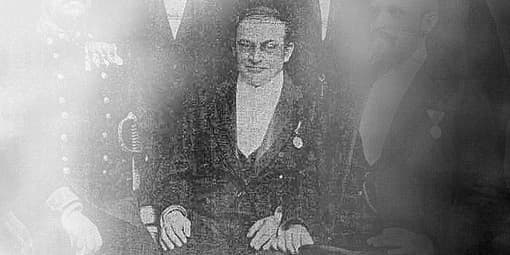
Born on 27 March 1858 in Hermannstädtel, Moravia, the son of a Moravian rabbinical family.
Completed his law studies in Vienna.
After his doctorates, a teacher at Viennese commercial schools.[1]
Publication of the study in the history of economic thought “Smith und Turgot” (Smith and Turgot) (1892); with it and further works on Adam Smith, Jacques Turgot and David Hume, he came to prominence in the early 1890s.
Habilitation at the University of Vienna, followed by teaching economics at the Vienna Export Academy (Exportakademie).
Taught economics at the Vienna Export Academy after his Habilitation, before his appointment as full professor in 1898.
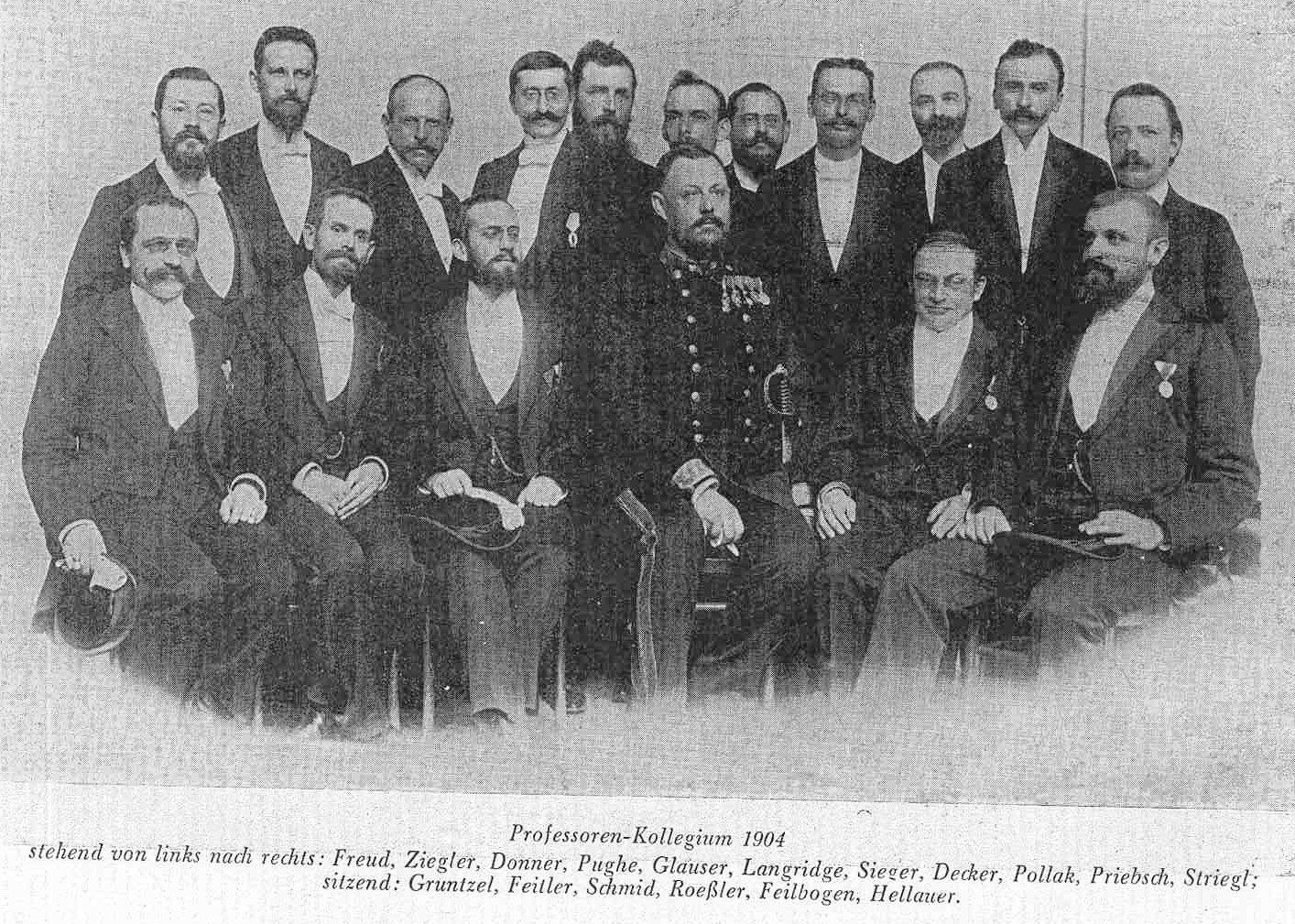
Appointed full professor of political economy at the Vienna Export Academy in October 1898.[4]
On 9 April 1908 Feilbogen, his wife and his sister-in-law attended the Easter Mass celebrated by Pope Pius X in Rome. Witnesses believed they had seen Feilbogen dispose of the consecrated host into a handkerchief; the incident drew wide attention and brought an end to his career.
Following the incident, Feilbogen was removed as a teacher from the Export Academy in a Vienna that had become noticeably antisemitic; isolated, he continued to teach at the University of Vienna before a very small audience.
Moved to Zurich during the First World War; worked there as a writer, translator and editor until his death; among other things, he edited the journal "Internationale Rundschau" (International Review).[5]
Died on 26 July 1928 in Zurich.
Als Privatdozent (1895–1908) und ab Oktober 1898 Ordinarius für politische Ökonomie an der k.k. Exportakademie im Palais Festetics gehörte Feilbogen zur engen Wiener Nationalökonomen-Szene um Böhm-Bawerk, Wieser und Philippovich. Die Mit-Übersetzung des Capitalzins-Anhangs 1903 setzt direkten Arbeitskontakt voraus.
Siegmund Feilbogen in the context of the School as a whole: five generations, their teacher-student lineages, circles and collegial ties.
Show in the family tree →